Have you ever thought about how the criminal cases get solved? Who are the people that help government officials in their investigation? Well to make it easy for you, those people are called “Forensic Scientists”. Most of you have watched the show CID where there is a forensic doctor who examines the bodies and collected evidence for discovering the truth that’s a cool job now you will be getting thought of how can I become one. Read this article to know about the Top career options in B.Sc. (Honors) in Forensic science.
What is B.Sc. (Hons.) Forensic Science?
B.Sc. (Hons.) Forensic Science is a three-year programme which trains you in various key subjects like Forensic Toxicology, Environmental Studies, crime scene investigation, society, Criminal Law, Dermatoglyphics, communication skills, Anthropology, Medicine, Ballistics, technological methods and Scientific tools.
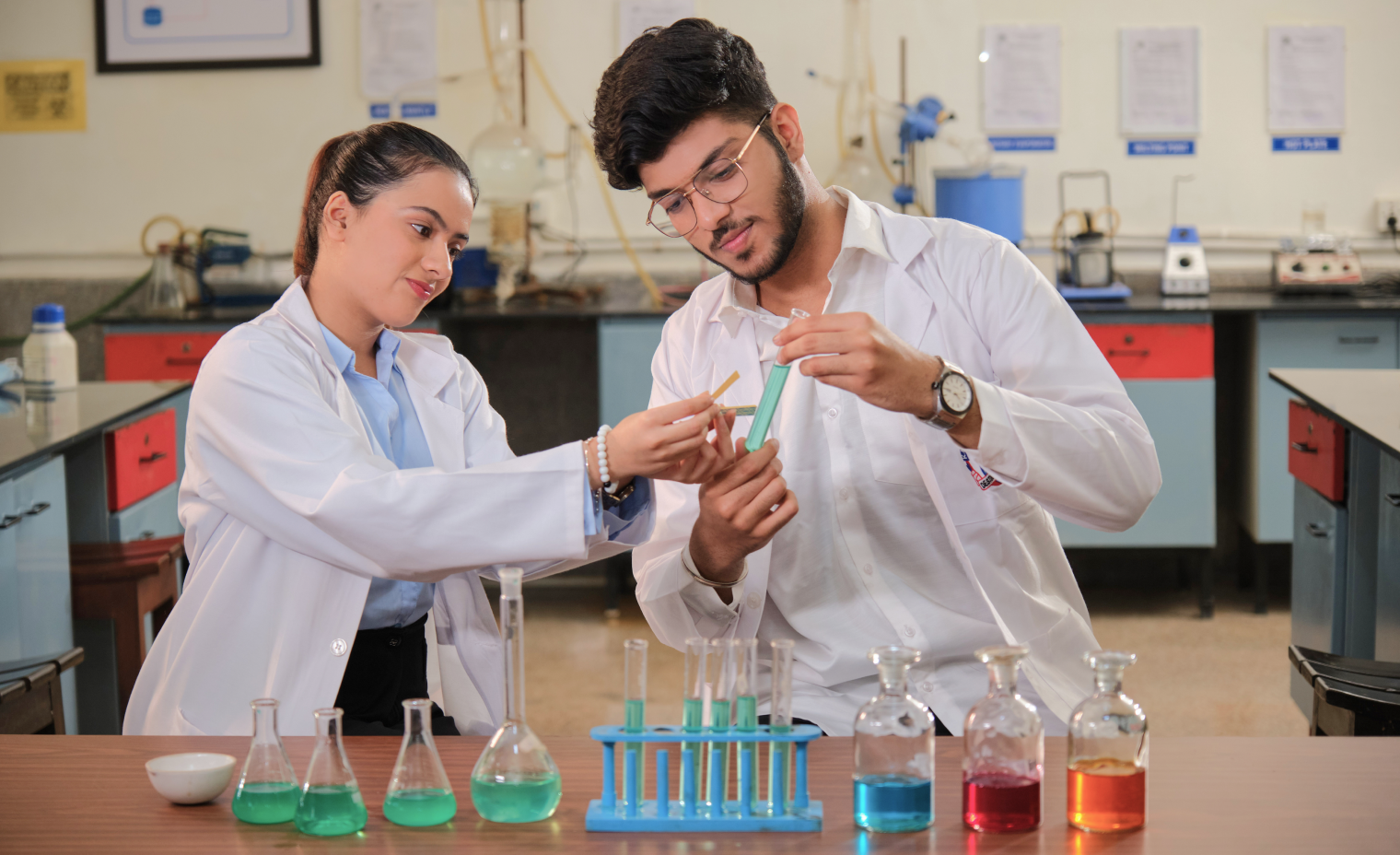
This subject is mostly about practical learning rather than theoretical to give a live exposure to how you can collect the pieces of evidence and perform tests with tools and technology in laboratories and solve twisted cases like a pro. Now, what is forensic science? It is known by the term “criminalistics”. Forensic science is a concept made from the aspects of laws of chemistry, physics, biology, social science and psychology which is used for analysing criminal activities.

Important Topics in B.Sc. Forensic Science
| Subjects |
Details |
| Crime and Society |
This subject is a connection between crime and society. All the crime happens in a society. |
| Environmental Studies |
This subject teaches you how you can investigate the environment where a crime has happened thoroughly with the help of scientific tools and technology for collecting evidence or proof. |
| Disaster Management |
This is related to the preparedness before the coming of a man-made disaster. This subject teaches how you can tackle disaster or reduce its impact by prepared investigation. |
| Forensic Psychology |
It’s an interesting subject which shows how to use psychological theories and methods to understand the behaviour of a criminal. |
| Forensic Dermatoglyphics |
This subject is focused on the analysis and tests of fingerprints, footprints, palm prints or any prints or wounds on the body. |
| Forensic Chemistry |
This subject teaches the laws of chemistry and how you can put these laws in a criminal activity test. |
| Criminal Law |
This subject talks about the laws related to crimes. |
| Technological Methods in Forensic Science |
This teaches about the technological methods used in laboratories like testing on fingerprints, bloodstains etc. |
| Skilled based activities |
These activities are basically for the improvement of your skills in using scientific tools and equipment. |
| Forensic Biology |
This subject teaches the physiology of blood and analysing DNA. |
| Forensic Ballistics |
In the students learn about the physics of guns and armaments. Forensic ballistics teaches about the impact of guns on a subject. |
| Forensic Toxicology |
This subject teaches about the toxic and acids found in someone’s blood and how to find them. |
| Forensic Anthropology |
It Includes the analysis of bones and skulls to solve a criminal case. |
Forensic Science Eligibility?
To pursue Bsc forensic science three-year programme you should have passed 10+2 in the science stream from a recognized board examination with a minimum of 50% aggregate marks.
Forensic Science Jobs
Now that you know what it takes to study forensic science, you must be interested in knowing what is int here for you after pursuing forensic science studies. These are some of the most sought after career profiles after pursuing B.Sc. Forensic Science:
- Forensic Expert – the job responsibility of a forensic expert is collecting, examining, and analysing, testing the evidence of a crime. They are the ones who make narratives based on facts received from criminal activities which should be totally unbiased. They analyse evidence like hairs, skin, nails, fingerprints, bloodstains, bruises e.t.c
- Forensic Psychiatrist -This is a very complicated B.Sc. forensic science scope it needs the knowledge of mental health with an understanding of laws. They help in the treatment of criminals with mental health issues and make reports on their improvement. Most of their work hours are spent in prison or in secure hospitals with mentally ill patients.
- Field Application Scientist -The Jobe role of the Field Application Scientist is to test science lab equipment and technology, provide customer services and solve issues related to the working of the equipment. They get to travel the world demonstrating or kind of teaching the use and benefits of different scientific tools.
- Teacher – You can be a teacher in colleges for forensic science or in a forensic science university. Teachers of forensic science duty are to take exams or tests and teach students about subjects like Forensic Toxicology, Environmental Studies, Environmental Studies, crime scene investigation, society, Criminal Law, Dermatoglyphics, and communication skills.
- Fraud Investigator – The main goal of a fraud investigator is to conduct an investigation on the evidence and criminal activity to look for any wrong information and to check if the facts provided are correct basically what they do is form allegations based on any wrong information provided by the competitors.
- Lab Technician – forensic lab technician works to assist crime investigators to examine the crime scene evidence to discover the truth. They engage in performing biological and microscopic and chemical research on evidence like fingerprints, scratches, and DNA testing of bloodstain on any object etc. received from a crime scene.
- Scientific Assistant – The job role of a scientific assistant is to assist other forensic scientists in analysing and examining the projects they work on. They also should make an everyday report on research projects.
- Crime Scene Investigator – The responsibility of a CSI is to investigate the crime scene closely in detail to find a piece of hard evidence. Taking photographs and videos of the investigation place. Sometimes they have to attend the court for trial to give a proper factful explanation with evidence.
- Private Investigator -The responsibility of a private investigator is to find and investigate proof in different criminal cases. They use cameras and scientific tools. They are mostly hired by agencies for collecting hard proof in criminal cases.
- Pathologist -The job role of a forensic pathologist is to examine the cause of death, wounds, scratch, injury and bruises on a body. Their work also includes reviewing medical reports, making conclusions on reports and examining people who are physically or sexually abused. They often work in government agencies and police departments.
Salary After Forensic Science
Pursuing forensic science will not only give you a good reputation and challenging workspace but would also bag you handsome salary packages with a stable career growth. The below mentioned graph shows the top Forensic science salary in various career profiles in India:

Overall, Bsc forensic science is a good course that will make you an expert in human behaviour, mental health, aspects and laws of science and human psychology. You will learn the practical functioning use of various science lab tools and types of equipment. B.Sc. forensic science offers you handsome salary packages and great career growth.
Check Out these amazing courses:
B.Sc.(Hons.) – Physics
B.Sc.(Hons.) – Chemistry
B.Sc.(Hons.) – Maths
FAQs
Is Forensic science hard to study?
The level of toughness of this course depends on your interest. If you like it you will never feel exhausted or feel like it’s hard.
Do women choose to be forensic scientists?
Yes, there are more women forensic scientists than there are men.
Who should go for forensic sciences?
Those individuals who are interested in helping society by solving crimes or are interested in human behaviour and psychology should choose this programme.
What are some tools used in forensic science?
Mass Spectrometers, Chromatographs, and High-Powered Microscopes are some tools that are used by a forensic scientists.
What is some government organisations’ forensic scientists’ work?
Intelligence Bureau, Crime Investigation Branch, Government forensics labs and Defence are some goverment organisations forensic scientists can work.
What skills does a Forensic Expert need?
Critical thinking skills, good Decision making, skills with lab tools, attentive behaviour, computer skills and communication skills.
Which are the major subjects taught in Bsc forensic science?
Forensic biology, Forensic Psychology, Criminalistics, Forensic Chemistry, Forensic Biology, Forensic Ballistics, and Forensic Anthropology are some major subjects of Bsc forensic science.




 13 Schools700+ Faculty Members












 13+Years of Educational Experience