If anyone wants to work in the pharmaceutical industry, the Diploma in Pharmacy (D. Pharm.) is a great place to start. The D.Pharm. programme is among the most useful courses in the realm of healthcare. It gives students the fundamental knowledge and practical experience they need to become competent professionals. The two-year D Pharm course subjects provide a detailed introduction to the pharmacy industry. Due to this, D.Pharm. graduates are able to thrive in community pharmacy, hospital pharmacy, pharmaceutical sales, and other pharm-related professions.
In this blog, the D Pharm course subjects, eligibility conditions, and other information for D.Pharm graduates will all be covered in this blog.
Overview
| Particular |
Description |
| What Is D Pharm Course? |
D.Pharm. (Diploma in Pharmacy) is a foundational pharmacy programme that prepares students for entry-level roles in healthcare and pharmaceutical services. |
| D Pharm Course Duration and Structure |
A 2-year academic programme followed by mandatory practical training as per the Pharmacy Council of India (PCI) guidelines. |
| D Pharm Course Eligibility |
Candidates must pass 10+2 with Physics and Chemistry along with Biology or Mathematics from a recognised board. |
| Career Options After D Pharm |
Pharmacist, Pharmacy Technician, Medical Representative, Pharmaceutical Sales Executive. |
| D Pharm Colleges in India |
K.R. Mangalam University (KRMU), Delhi Institute of Pharmaceutical Sciences and Research (DIPSAR), Manipal College of Pharmaceutical Sciences, Bharati Vidyapeeth College of Pharmacy, Institute of Chemical Technology (ICT), L.M. College of Pharmacy, JSS College of Pharmacy |
| Why Choose K.R. Mangalam University (KRMU)? |
Industry-oriented learning, experienced faculty, modern labs, and a focus on employability and skill development. |
| D Pharm Course Subjects and Other D Pharm Course Details of KRMU |
KRMU’s D Pharm Core Course Subjects and other basic details. |
What Is D.Pharm. Course?
The two-year undergraduate Diploma in Pharmaceutical (D.Pharm.) curriculum gives students the foundational knowledge about the pharmaceutical sector. They acquire the skills needed to work as pharmaceutical professionals. The training focuses on handling drug therapy in different healthcare settings, preparing and dispensing pharmaceuticals, and using drugs for medical purposes.
Students get both academic knowledge and hands-on training throughout the curriculum. This ensures that they are prepared to meet the needs of the pharmaceutical industry. The curriculum is intended to teach students not just how medications function but also how to give patients safe and effective medication therapy.
D.Pharm. Course Duration and Structure
Usually, the two-year D.Pharm programme can be divided into four semesters. While the first year usually concentrates on the fundamental sciences (such as pharmacology, medicinal chemistry, and anatomy), the second year delves deeper into practical pharmacy, medication management, and patient care.
Despite its brief duration, the course offers a solid foundational base to prospective pharmacy professionals. Students are guaranteed to graduate with real-world experience and technical proficiency thanks to the combination of classroom training and clinical internships.
Also Read: D Pharmacy Course Details: Eligibility, Admissions & Subjects
D.Pharm. Course Eligibility
Students must fulfil specific requirements in order to be admitted to the D.Pharm. programme. Generally speaking, the requirements are as follows, though they may differ slightly depending on the college or university:
| Requirements |
Descriptions |
| Educational Requirement |
Completed 10+2 (or equivalent) from a recognised board with science courses in physics, chemistry, and biology/mathematics. Minimum of 50% on the qualifying exam (institution-specific requirements may differ). |
| Entrance Exams |
While some institutions offer direct admission based on 10+2 scores, others may require applicants to pass a state-level or institution-specific entrance exam. |
| Medical Fitness |
To make sure an applicant is qualified for the course, certain universities may also need a medical fitness certificate. |
Career Options After D.Pharm.
Below are some career options after D.Pharm.:
| Career Option |
Description |
Salary Range (INR) |
| Pharmacist (Hospital or Medical Store) |
Dispenses medicines, advises patients, and manages prescriptions. |
4 LPA – 5 LPA |
| Pharmacy Technician |
Assists pharmacists in preparing medicines, managing inventory, and performing lab work. |
3.5 LPA – 5 LPA |
| Medical Representative |
Promotes pharmaceutical products to doctors and healthcare professionals. |
3.5 LPA – 5 LPA (plus incentives) |
| Pharmaceutical Sales Executive |
Handles sales operations, client relations, and market expansion for pharma companies. |
3 LPA – 6 LPA |
Disclaimer: Salary ranges are indicative and may vary based on experience, location, employer, and industry trends.
D.Pharm. Colleges in India
Below are some of the well-known D Pharm colleges in India:
- K.R. Mangalam University (KRMU)
- Delhi Institute of Pharmaceutical Sciences and Research (DIPSAR)
- Manipal College of Pharmaceutical Sciences
- Bharati Vidyapeeth College of Pharmacy
- Institute of Chemical Technology (ICT)
- L.M. College of Pharmacy
- JSS College of Pharmacy
Why Choose K.R. Mangalam University (KRMU)?
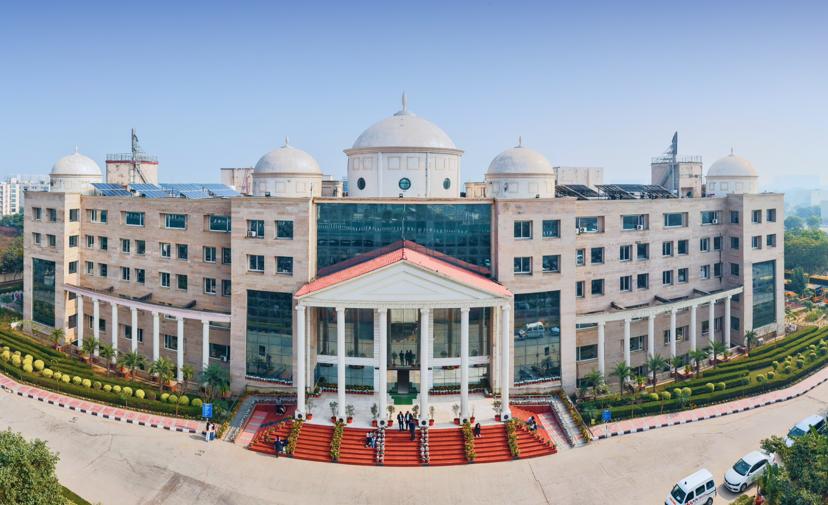
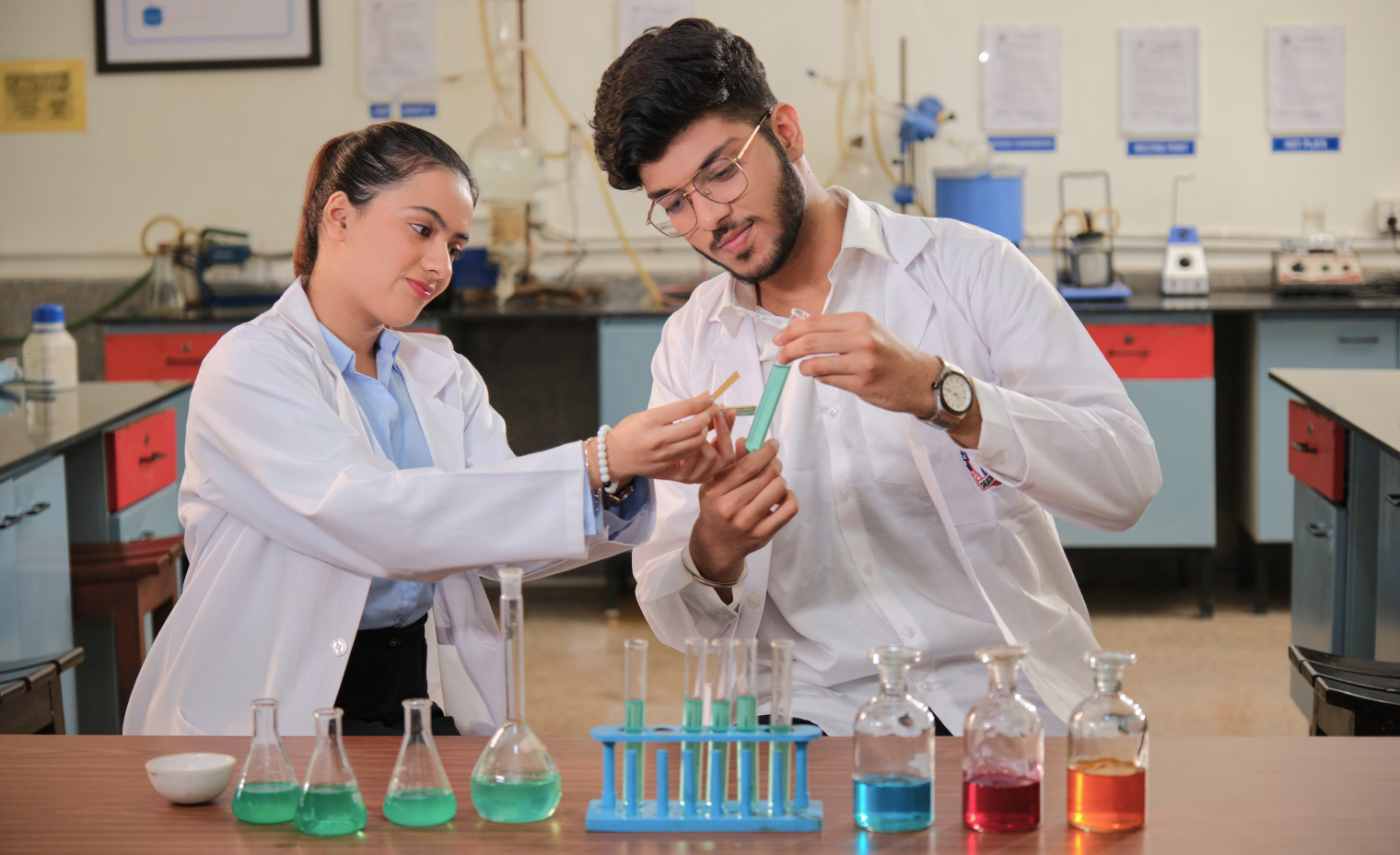
By combining academic knowledge with practical training, KRMU’s well-structured D.Pharm. curriculum helps students to learn in a range of healthcare settings. It strongly emphasises research-based learning, employs cutting-edge diagnostic tools, and expert-guided practice to give future healthcare professionals the ability to adapt to shifting market demands. Through professional supervision, hands-on clinical practice, and access to well-equipped laboratories, students gain a comprehensive understanding of medical sciences.
D.Pharm. Course Subjects and Other D.Pharm. Course Details of KRMU
D.Pharm. Course Subjects
Below are descriptions of some of the subjects offered in the KRMU’s D.Pharm. syllabus:
Pharmaceutics Theory
The science of dosage form design, development, manufacture, and evaluation is the main topic of Pharmaceutics Theory. It encompasses the use of physical pharmacy concepts and formulation techniques. It also covers regulatory standards to convert substances into stable, safe, and effective medications (such as pills, injections, and liquids).
Pharmaceutical Chemistry Theory
It combines organic, inorganic, and physical chemistry to address the design, synthesis, structure-activity relationships (SAR), and analysis of pharmaceutical drugs. In order to create safer, more potent pharmaceutical molecules, it focuses on comprehending pharmacological characteristics, metabolic pathways, quality control, and the mechanism of action.
Pharmacognosy theory
The methodical scientific study of crude pharmaceuticals, medicinal plants, animals, and minerals used in medicine, including their history, production, collection, identification, and assessment. It connects traditional systems (such as Ayurveda and Unani) with contemporary pharmacy by focusing on the physical, chemical, and biological characteristics of natural goods and their phytochemical ingredients.
Human Anatomy and Physiology Theory
With an emphasis on how cells, tissues, organs, and systems preserve homeostasis, human anatomy and physiology theory investigates the structure (anatomy) and function (physiology) of the human body. Cardiovascular, neurological, respiratory, skeletal, muscular, and digestive systems are important domains that are essential to comprehending illness states and bodily regulation.
Social Pharmacy
The multidisciplinary field of social pharmacy theory examines the social, scientific, and humanistic facets of medicine usage. It emphasises epidemiology, public health, preventative care, health education, and the role of chemists in advancing national health initiatives, community health, and nutrition.
Pharmacology Theory
The scientific study of pharmaceuticals, with an emphasis on their genesis, characteristics, and effects on biological systems, is covered by pharmacology theory. Pharmacokinetics (absorption, distribution, metabolism, excretion) and pharmacodynamics (drug actions on the body) are important subjects. Drug classification, therapeutic applications, mechanisms of action, and side effects are highlighted.
Biochemistry & Clinical Pathology Theory
It focuses on the molecular mechanisms of living cells and their pathological alterations. It covers the structure/function of biomolecules (carbohydrates, lipids, and proteins), metabolism, enzymology, and clinical analysis of blood/urine to understand disease states. It bridges basic chemistry with medical diagnostics.
D.Pharm. Course Details
D Pharm Course Duration: 2 Years
D Pharm Course Fees: INR 120,000 Per Year.
D Pharm Course Eligibility: Candidates must have passed any one of the following examinations with physics, chemistry, and biology or mathematics as compulsory subjects:
- Intermediate examination in science
- First year of a three-year degree course in science
- 10+2 examination (academic stream) in science from a recognised board
- Pre-degree examination
- Any other qualification recognised by the Pharmacy Council of India (PCI) as equivalent to the above examinations
Conclusion
The D.Pharm. course is a practical and career-oriented programme that builds a strong foundation in pharmacy education. Understanding the D Pharm course subjects, eligibility, duration, fees, and college options helps students make informed academic decisions. With diverse career opportunities in healthcare and pharmaceuticals, D.Pharm. serves as a solid entry point into the pharmacy profession and a pathway for higher studies and long-term growth.
K.R. Mangalam University (KRMU) offers a PCI-aligned D.Pharm. programme with a strong focus on practical training, modern laboratories, and industry-relevant learning. Explore the D.Pharm. programme at KRMU to begin your journey toward a rewarding career in pharmacy.
Also Read: Pharmacy Students and the Future of Pharmacy: An Overview
FAQs
What is the D.Pharm. course?
D.Pharm. (Diploma in Pharmacy) is a two-year diploma programme that trains students in pharmacy fundamentals, medicine dispensing, and patient care.
What are the main D.Pharm. course subjects?
Key subjects include Pharmaceutics, Pharmaceutical Chemistry, Pharmacognosy, Human Anatomy & Physiology, and Hospital Pharmacy.
What is the eligibility for the D.Pharm. course?
Candidates must have passed 10+2 with Physics and Chemistry along with Biology or Mathematics from a recognised board.
What is the duration of the D.Pharm. course?
The D Pharm course duration is two academic years, followed by practical training as prescribed by the Pharmacy Council of India (PCI).
























 13+Years of Educational Experience